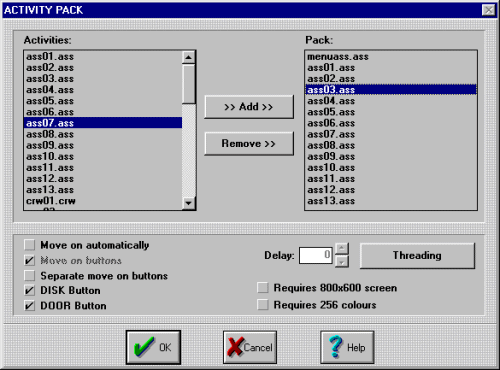
Activity packsThe packs are basically a list of activities that Clic will present to the user one after the other. A pack is usually set up in the last step of creating a Click application once the component activities have been made and saved in the working directory.
- The list of activities to be presented to the user. This is made up of the activities in the working directory through the Add and Remove buttons.
- The mechanism used to move from one activity to another. The user normally has to click on the move on buttons (the arrows) go forward or back in the pack, but if the move on automatically box is marked the programme goes on to the next activity once the current one is finished, with the option of including a delay before changing activities. If the automatic move is activated and the Move on buttons box is unmarked a closed pack is created where the user has to solve all the activities to reach the end. This technique should only be used in very particular cases. It is usually preferable to use a combination of the buttons and automatic move to avoid giving the student the sensation of being in a blind alley when confronted with an activity that they cannot solve.
- The pack appearance: whether the move on buttons should be together or separated on the left and the right; whether the Disk and Door buttons should be shown; or whether the user should be warned that the pack requires a 800x600 screen or 256 colours in case they try to use it in lower conditions.
- The threading allows the definition of circuits that go back to an options menu or advance according to the level of correct answers. There are three types of pack threading:
- Default threading indicates the pack that will automatically start when the current one is finished.
- Low threading moves on to another pack (in principal easier than the current one) a minimum accuracy is not reached, or a set time is exceeded.
- High threading should move on to a more complicated pack when the student passes a certain threshold of points in a reasonable time. The mechanism of point calculation used by Clic to decide on low and high threadings depends on the precision concept used in the reports, which is explained later.


|